

Welcome to a captivating odyssey into the heart of interior design, a journey where every piece of furniture is an island to discover and every placement a treasure map revealing the secrets of harmony and style. Today, we dive into an essential, almost philosophical question that touches the very heart of our living spaces: where should you place a table in a living room? This question, although simple in appearance, in fact hides a complex and fascinating world of design, function and aesthetics.
The living room, the main room of our homes, is a theatre where our daily lives play out. It welcomes our laughter, our conversations, our moments of relaxation and conviviality. At the centre of this stage, the table (whether dining, coffee or side) is not just a utilitarian object. It is the beating heart of our interactions, the pivot around which our domestic activities revolve. Its position dictates the rhythm and flow of our family environment, subtly influencing our behaviour and interactions.
In this room, every element must harmonise to create a space that is practical, welcoming and aesthetically pleasing. The choice of where to put the table is therefore crucial. It must meet practical considerations, of course, but also a quest for visual and functional balance. It is a challenge, a puzzle that every decor enthusiast has to solve.
So how can you turn this challenge into an opportunity to reinvent and energise your living room? How do you choose the ideal location for your table, one that will not only optimise the space but also create a harmonious, inviting and warm environment? Sit back comfortably (ideally at your favourite table), because we are about to explore these questions together, in search of the perfect symbiosis between form and function.
I. Where to put the dining table in the living room

The art of harmony
In the quest for the perfect location for a dining table in a living room, the first principle to consider is harmony. This harmony is a delicate balance between accessibility, aesthetics and function. It begins with assessing the available space. Is it a vast open-plan living room that lends itself to a large, majestic table? Or is it a more compact space that calls for caution and creativity in the choice and placement of furniture?
Think of the table as a centrepiece, a jewel around which the rest of the living room is organised. A central placement is often ideal, because it allows smooth, open circulation. This centrality creates a natural focal point, drawing the eye and inviting conviviality. However, central does not necessarily mean the exact middle of the room. It is rather a matter of finding a point of visual and functional balance, a place where the table can shine without hindering circulation or interaction with the other elements of the living room.
A dialogue with light
Light, such a crucial element in any interior design, plays a major part in choosing the position of your dining table. A table placed near a source of natural light, such as a large window or a glazed bay, enjoys an invigorating atmosphere during the day, perfect for sunny lunches or afternoons of work or leisure. This position also lets you enjoy the view outside, creating a subtle link between inside and outside.
However, natural light is only part of the equation. Artificial lighting also plays a crucial role, particularly for dinners and evenings. A pendant light above the table, for example, can become a key design feature while giving a warm and inviting light. The choice of lighting, whether subtle and subdued or bold and dramatic, helps define the mood and atmosphere of the living room.
Interaction with the rest of the furniture
The dining table should not be seen as an isolated island. It should interact harmoniously with the other elements of your living room: sofas, armchairs, shelves, works of art and even the rug. This aspect of design is essential for creating a coherent, integrated space.
The arrangement of the seats around the table is a crucial aspect. They should be placed so as to encourage conversation and interaction, while leaving enough room to move around easily. Likewise, aligning with or contrasting with other furniture, such as a sofa or a bookcase, can help define distinct zones in an open-plan living space while maintaining visual flow and unity.
Ultimately, the placement of the dining table in your living room is an invitation to creativity and personal expression. It is about finding the perfect balance that reflects your style, meets your needs and turns your living space into a place that is both beautiful and functional.
II. Integrating side tables and coffee tables

Side tables: small but mighty
Side tables are those discreet gems that enrich the living room experience without dominating the space. Their strategic placement is essential to maximise both beauty and function. These small tables act as bridges between different pieces of furniture, offering a practical surface for a lamp, a book or a cup of coffee, while contributing to the aesthetic balance of the room.
The ideal position for a side table is beside an armchair or sofa, where it is easy to reach but does not disrupt circulation. Think of these tables as satellites, complementing and balancing the larger elements of the room. Their size and design should complement the other furniture without eclipsing it, acting as accent points rather than focal points.
The coffee table: the living room's centre of gravity
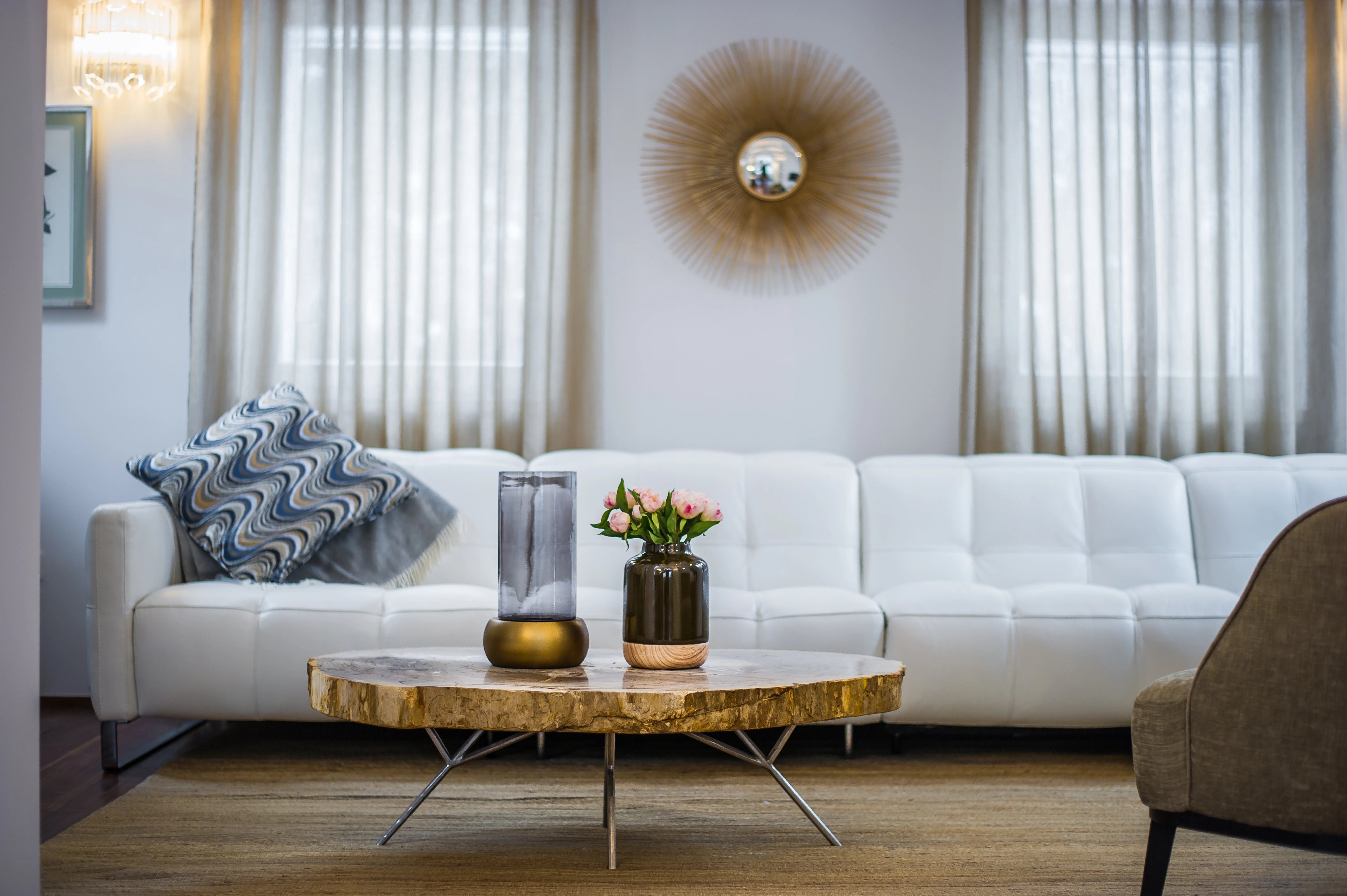
The coffee table is often the centre of gravity around which the rest of the living room is organised. It is not simply a convenient place to set things down, but a central element of the room's design. Its position should therefore be chosen with care. Ideally, it is positioned so as to be easily accessible from the main seats while keeping a comfortable distance to make circulation easier.
The size and shape of the coffee table must be considered in relation to the available space. A large table in a small living room can seem bulky, while a small table in a large space can look lost. The shape of the table also plays a key role in the flow of the room: round or oval tables encourage smooth circulation, while square or rectangular tables can help structure and define the space.
III. Playing with shapes and materials
In the world of interior design, shapes and materials tell unique stories and bring our surroundings to life. The choice of the shape and material of your table can have a significant impact on the mood and style of your living room.
Round tables, for example, are often associated with conviviality and inclusion. Their lack of sharp corners creates a sense of fluidity and movement in the space. They are ideal for small groups and tight spaces, where they encourage interaction and openness. Rectangular tables, on the other hand, with their straight lines and defined structure, suit larger spaces better. They give a sense of order and formality, perfect for large gatherings or elaborate dinners.
The choice of materials is just as important. Wood, with its warm tones and natural texture, brings a sense of authenticity and comfort. It lends itself to a variety of styles, from rustic to modern, and can create a welcoming and warm atmosphere. Glass tables, for their part, evoke modernity and lightness. They can help open up the space, making rooms brighter and airier. Metal, often used for frames or accents, brings an industrial or contemporary touch, offering durability and elegance.
Combining different materials can also be an effective strategy for adding depth and visual interest to your space. For example, a table with a wooden top and metal legs can offer a balance between warmth and modernity, while bringing a unique touch to your living room.
Ultimately, playing with shapes and materials is not only a matter of aesthetic design; it is a way of expressing your personality and telling your story through your living space. Whether you prefer the elegant simplicity of a glass table or the rustic warmth of a solid wood table, every choice is a reflection of your personal style and your vision of home comfort.
IV. Extending tables: a practical solution for small spaces

Extending tables are a brilliant innovation in the world of furniture, offering unrivalled flexibility and function, especially for those who live in small spaces. Their ability to transform according to need makes them an ideal choice for living rooms that have to adapt to different situations: an intimate space for everyday meals that can be transformed into a gathering place for special occasions.
Placing an extending table in a living room requires strategic thinking. It is essential to allow enough space around the table when it is extended to its maximum size. This often means placing the table where it can be easily extended without disrupting the overall layout of the room. A position near a wall or in a corner of the living room can be ideal, allowing the table to be extended as needed while maximising the available space when the table is in its reduced form.
Another aspect to consider is how the table looks both folded and extended. In its compact form, the table should blend harmoniously into the design of the living room, acting as a complementary rather than dominant element. When extended, it should become a welcoming and functional centrepiece, able to seat your guests comfortably.
V. Conclusion: your table, your story
Choosing where to place a table in a living room is much more than a practical decision; it is an act of creation, a way of expressing your personality and telling your story through your living space. The table is not simply a piece of furniture, but a companion for life, a witness to your moments of sharing, laughter, work and conviviality.
By following the advice and principles set out in this article, you are not just optimising the space and function of your living room. You are also adding a personal and artistic touch. Every table, with its unique placement and style, reflects part of your identity and your values. Whether you choose an extending table for its flexibility, a glass coffee table for its modern elegance or a sturdy wooden table for its warmth and durability, every choice is a chapter in your personal story.
Remember, the living room is the heart of the home, and the table is its focal point. It is the place where meals are shared, where ideas are born, where memories are made. By choosing the position and style of your table with care, you enrich not only your living space but also the quality of the moments spent in it. Happy decorating, and may your table be the stage for many happy and memorable stories.