
Introduction
The world of high-end furniture is a fascinating universe where detail and precision reign. Each piece is a work of art that bears witness to the talent and expertise of the craftsman. One of the most impressive techniques used in this field is undoubtedly marquetry, a method of embellishment that calls for great technical mastery. In this article, we will guide you through the delicate process of sanding a wooden table with marquetry.
This subject may seem complex at first, but it is essential for anyone who wants to preserve the beauty and integrity of their precious furniture. Whether you are a keen amateur or simply curious to learn more about the fascinating world of furniture craftsmanship, we hope this article will be a valuable source of information and inspiration.
We will begin by exploring the origins and meaning of marquetry before diving into the heart of the matter: how do you sand a wooden table with marquetry properly? Get ready to step into a world where craftsmanship goes hand in hand with passion and perfection.
1. Understanding marquetry and its importance in furniture craftsmanship

What is marquetry?
Marquetry is an ancient decorative technique that involves inlaying pieces of wood, bone, mother-of-pearl or other precious materials into a wooden surface to create intricate, detailed patterns. It is an art that calls for patience, skill and a keen eye for detail.
The history and evolution of marquetry
Marquetry appeared several thousand years ago. The earliest traces of the technique go back to ancient Egypt, where it was used to decorate the sarcophagi of the pharaohs. Over time, marquetry developed and evolved, passing from the hands of Egyptian craftsmen to the workshops of Renaissance Europe, and on to the present day, when it is still highly valued for its timeless elegance.
Why sanding is crucial for a wooden table with marquetry
Sanding is an essential step in the care of a wooden table with marquetry. It not only preserves the beauty of the inlaid pattern, but also protects the wood from wear and potential damage. Correctly done sanding can considerably extend the life of your table and ensure it remains an impressive focal point in your space for years to come.
Now that we have explored what marquetry is and why sanding is so important, it is time to prepare for the process itself. In our next section, we will discuss the tools needed for sanding and the safety measures to take. Stay with us to find out how to give your wooden table with marquetry the care it deserves.
Want to know more about the art of marquetry and premium designer furniture? Subscribe to our newsletter and join a community passionate about craft excellence.
2. Preparing before sanding
The tools you need for sanding
Before you launch into sanding, it is important to have the right tools to hand. An electric sander is generally recommended for its ease of use and efficiency, but a simple sanding block can also do the job for small tasks. Also make sure you have a variety of fine and coarse-grit abrasive papers, as well as a vacuum cleaner to remove the dust produced by sanding.
Safety when sanding: equipment and precautions
Safety should be your priority when sanding. Always wear safety glasses to protect your eyes from dust, as well as a respirator mask to avoid breathing in harmful particles. Also make sure you work in a well-ventilated space, and remember to clean your workspace regularly to avoid a build-up of dust.
How to prepare your table before sanding
To prepare your wooden table with marquetry for sanding, start by cleaning it thoroughly to remove any dirt or residue that could get in the way. If necessary, repair any imperfections or damage on the surface with wood filler before you start sanding. Finally, make sure the table is stable and positioned at a comfortable working height.
3. The sanding process, step by step

Choosing the abrasive paper: fine or coarse grit?
The choice of abrasive paper will depend on the condition of your table. If the surface is very rough or has significant defects, start with a coarse-grit paper to remove the imperfections quickly. Once you have a smoother surface, move on to a finer-grit paper for a soft, even finish. Remember that the aim of sanding is to improve the adhesion of the varnish or paint, not to remove all of the previous finish.
Sanding techniques for preserving the marquetry
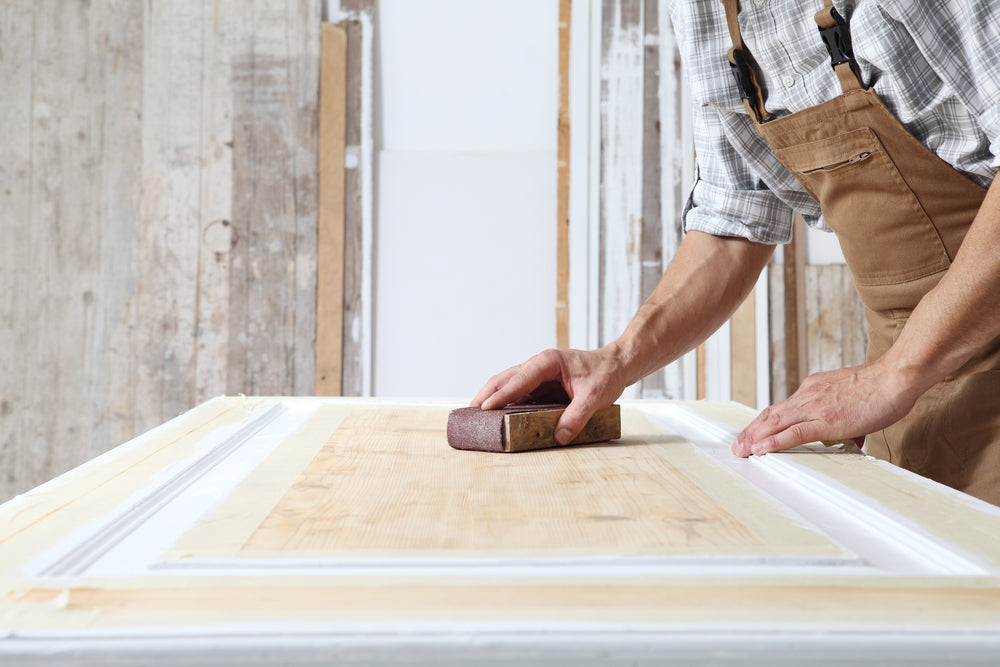
Sanding a table with marquetry takes particular care to preserve the delicate details of the pattern. We recommend using a sanding block rather than an electric sander so that you can control the pressure applied to the surface more easily. Also, always sand with the grain of the wood to avoid creating unsightly scratches.
Tips for the best result
To get the best possible result when sanding, make sure you change your abrasive paper regularly as soon as it starts to wear. Also, do not hesitate to use a lamp to light your work and show up areas that need more attention. Finally, clean the surface regularly with a damp cloth to remove dust and check that your work is even.
Sanding may seem a daunting task, but with the right tools, proper safety precautions and a careful technique, you can restore your wooden table with marquetry to its full shine. In the next part, we will look at care after sanding to protect and prolong the beauty of your piece.
4. Care after sanding
After spending time carefully sanding your wooden table with marquetry, it is crucial to look after it properly to preserve its beauty and durability.Cleaning after sanding
Sanding can leave behind dust residue that must be removed before applying any finishing product. Use a soft, slightly damp cloth to clean the surface of the table, taking care not to wet the wood excessively. Then leave it to dry completely.Protecting your table: varnish, wax or oil?
There are several options for protecting your wooden table after sanding. Varnish offers lasting protection and is ideal if you plan to use the table regularly. Wax gives a soft, silky finish and brings out the details of the marquetry, but it needs more frequent upkeep. Oil penetrates deep into the wood and offers natural protection without altering the look of the wood grain.Regular care tips to extend the life of your table
Regular care is essential for keeping your wooden table with marquetry looking its best. Avoid harsh cleaners, which can damage the wood or dull the finish. Wipe up spills immediately to avoid stains. Protect the table from direct sunlight, which can fade the wood.5. When and why to call in a professional
Although sanding a wooden table with marquetry is a feasible project for DIY enthusiasts, there are times when it is better to call in a professional.Recognising the limits of your DIY skills
Sanding takes a certain expertise to get the best results without damaging the marquetry. If you are not sure of your skills, or if your table is particularly valuable or antique, consider calling in a professional.The risks of badly done sanding on marquetry
Inadequate sanding can lead to visible scratches, damage the marquetry or even remove too much of the wood. A professional has the experience and the equipment needed to do the job properly.The benefits of professional expertise
A professional craftsman can not only do the sanding, but also repair any imperfections in the marquetry, restore missing pieces and apply a suitable finish to protect your table. They can also give you valuable advice on the future care of your furniture. In conclusion, sanding a wooden table with marquetry is a process that takes time and care, but it can give your furniture a new lease of life. Remember that if the project seems too ambitious, professionals are there to help you.In short, we have explored the richness of marquetry craftsmanship and its importance in high-end furniture. We have understood that sanding a wooden table with marquetry is a delicate process that calls for careful preparation, the right tools and specific techniques to preserve the integrity of the design. Care after sanding is just as crucial for maintaining the beauty and durability of your table.
It is essential to understand that every table is unique and therefore deserves particular attention. The quality of a table lies not only in its function, but also in its ability to turn an indoor or outdoor space into a warm and welcoming place. By mastering the art of sanding, you help preserve this beauty for years to come.
But let us not forget that there are limits to what we can achieve alone. In some cases, it would be wise to call in a professional to avoid the risks of badly done sanding on marquetry. This is where Verano Design steps in with its professional expertise.
We therefore encourage you to explore our exclusive collection of coffee tables and dining tables, all made with care by our expert craftsmen. Whether you are looking for a centrepiece for your dining room or an elegant coffee table for your living room, you will surely find what suits your tastes and needs at Verano Design.
Finally, we invite you to keep up with the latest trends in designer furniture and decoration. The world of design is constantly evolving, and at Verano Design we are committed to providing you with the most elegant and contemporary pieces for your home or outdoor space.
Do share your experiences or questions about sanding marquetry in the comments below or on our social media. We are always glad to hear about your decorating and interior and exterior design projects. Together, let us keep the beauty of premium designer furniture alive.