
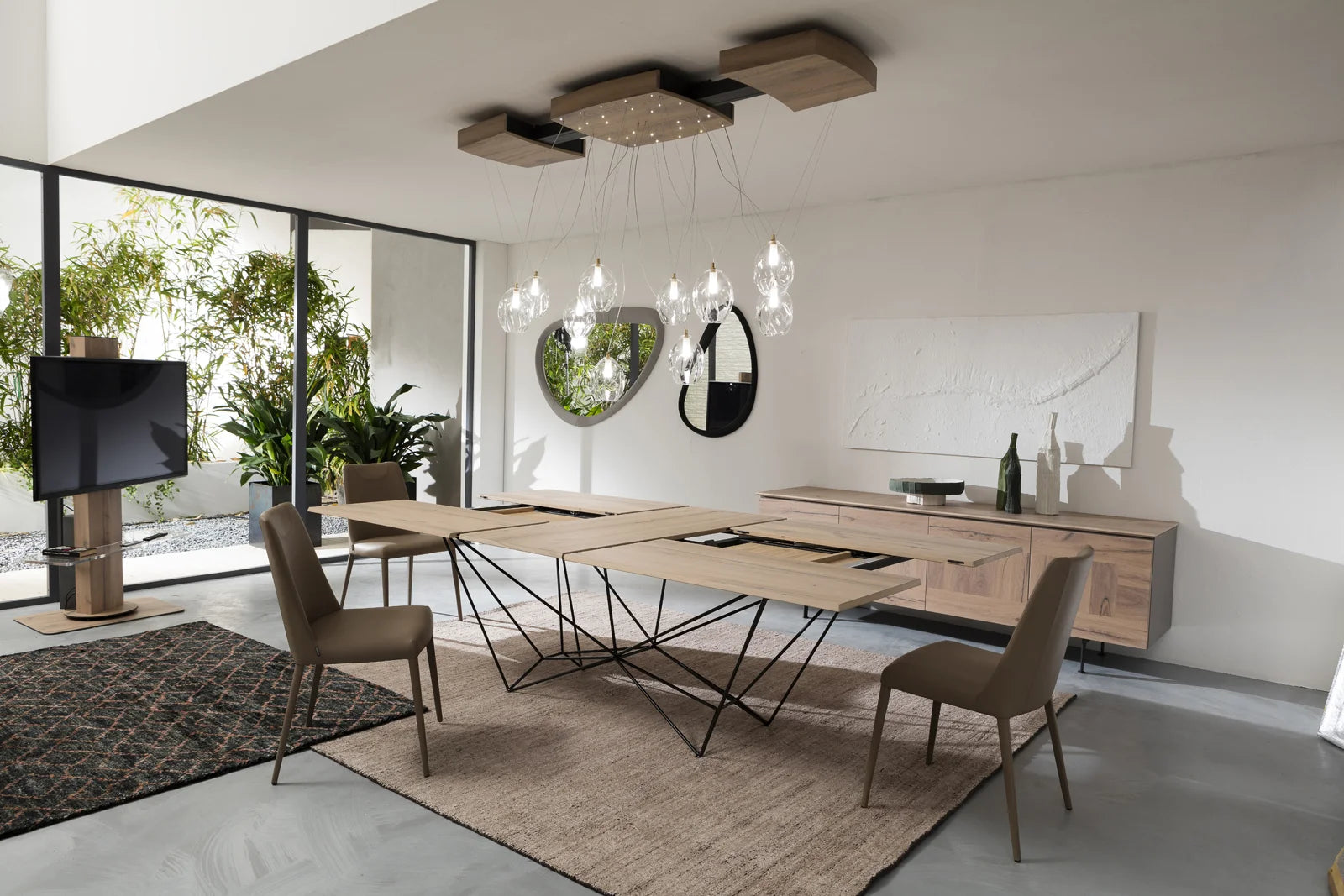
How to extend and enlarge a table?
When it comes to furniture, versatility is an invaluable quality, particularly for tables. Whether to seat extra guests at an impromptu dinner or to adapt a space to different uses, the ability to extend a table is a major asset. In this article, we will explore the different methods for extending and enlarging a table, with a particular focus on rectangular tables, one of the most popular and timeless designs in furniture. Come and discover our extendable square tables.
1. How to extend a rectangular table?
a. Understanding the basics
Before diving into the process of extending a table, it is crucial to understand the basics. A classic rectangular table is designed for everyday use, offering enough space for family meals. However, some occasions call for a larger surface. Extending a rectangular table means increasing its length (and sometimes its width) to provide more room.
b. Types of extension
There are various types of extension suited to rectangular tables. The most common are:
- Removable leaves: These are sections of table that can be inserted or removed as needed. They are often made from the same material as the table for a harmonious fit.
- Sliding extensions: Some tables are fitted with a sliding mechanism, allowing the ends to move apart, creating a gap in which to insert an extension.
c. Choosing the material
The choice of material for the extensions is essential. It must not only match the look of the existing table but also offer the necessary durability and sturdiness. Common materials include wood (for a traditional look), glass (for a more modern look) and metal (for an industrial touch).
d. Extension mechanisms
Extension mechanisms vary according to the table model. Some systems are based on metal runners, while others use hinges or locking devices. Ease of use is a key factor; a good mechanism should allow the table to be extended and retracted easily.
e. Installing the extensions
Installing the extensions must be done with care. Follow these steps for a successful installation:
- Preparing the space: Make sure you have enough room to handle the table and the extensions.
- Opening the table: If your table has a sliding mechanism, gently pull the two halves apart to create a gap in the centre.
- Inserting the extensions: Carefully place the extension or extensions in the gap created. Make sure they are well aligned and fixed, if necessary.
- Checking stability: Once the extension is in place, check its stability. It must be perfectly aligned with the main surface of the table.
f. Design and decoration tips
When you extend a table, also think about its look. Here are a few tips for maintaining visual harmony:
- Choose matching extensions: Opt for extensions that complement the style and colour of your table.
- Accessorise consistently: When the table is extended, adjust the decoration accordingly. Use tablecloths, table runners and centrepieces that suit the new size of the table.
- Light it properly: Make sure the lighting in your dining room covers the whole length of the extended table. Even lighting is essential for creating a warm, welcoming atmosphere.

g. Maintenance and care
Finally, looking after your extended table is crucial to ensure its lifespan. Clean the extensions regularly with products suited to their material. Also check the extension mechanism periodically to make sure it works properly. Regular maintenance will prevent premature wear and ensure that your table remains a central and functional part of your home.
By following these tips, you will be able to turn a simple rectangular table into a versatile centrepiece, able to adapt to all kinds of occasions. Whether for family meals or larger gatherings, an extended table is the ideal solution for a flexible, elegant interior.
2. How to add extensions to a table?
a. Selecting the extensions
The first step in adding extensions to a table is selecting the right pieces. Choose extensions that not only fit the dimensions of your table but also harmonise with its design and finish.
b. Measuring and fitting
Measure the available space precisely to make sure the extensions will fit perfectly. If necessary, make adjustments or order made-to-measure extensions for an optimal fit.
c. Fixing systems
There are various fixing systems for extensions: hooks, screws or clips. Choose a system that offers good stability while being easy to handle. It is crucial that the extensions are securely fixed to avoid any movement or misalignment during use.
d. Installation process
Installing the extensions must be done with care. Make sure to align the extensions correctly with the main surface of the table, and check that they are firmly fixed and stable. If necessary, ask a professional for help to guarantee a safe and accurate installation.
e. Visual appearance and consistency
When you add extensions, take care to maintain visual consistency. If the extensions are a different colour or material, consider ways to integrate them aesthetically, such as using tablecloths or table runners.
f. Care and durability
As with any piece of furniture, care is crucial. Clean your extensions regularly and check their fixing system to ensure their longevity and performance.
3. Techniques and tips for perfect integration
a. Harmonising styles
Perfect integration of an extension begins with harmonising styles. If you cannot find extensions that match your table exactly, look for alternatives that complement or contrast attractively with the existing design.
b. Personalisation
If the available extensions do not match your table perfectly, consider personalising them. You can paint them, varnish them or apply an adhesive covering to make them match the look of your table.
c. Creative solutions for height differences
Sometimes the extensions may not line up perfectly in height with the surface of the table. In this case, use creative solutions such as shims or height adjusters to ensure an even tabletop.

d. Visual and functional integration
Integrating the extensions is not only about their practical side; it also includes how they fit visually into the space. Make sure the extensions do not disrupt the flow of the space and that they harmonise with the rest of your interior decoration.
e. Using tablecloths and accessories
A simple way to integrate extensions visually is to use tablecloths and accessories. A tablecloth can hide the differences between the table and the extensions, creating a unified appearance.
f. Storage tips
If the extensions are not in permanent use, think about practical storage solutions. Some tables offer built-in storage for the extensions, while others need separate storage. Set aside a storage space nearby to make the extensions easy to reach and handle.
By following these steps and tips, you can not only add extensions to your table in a functional way but also make them a harmonious decorative element integrated into your interior. This will let you enjoy maximum flexibility in your layout, while maintaining a pleasing, consistent look.
4. Innovative solutions for small spaces
a. Built-in extendable tables
In small spaces, extendable tables with built-in leaves are treasures of versatility. They can easily change from a small table to a larger one, offering a perfect solution for flats or houses with limited space.
b. Convertible tables
Convertible tables are another brilliant innovation. They can serve as a desk, console or coffee table day to day, and turn into a dining table when needed. They are ideal solutions for making the most of every square centimetre in a small space.
c. Clever extension mechanisms
Extension mechanisms for small tables often include sliding, folding or pivoting elements, allowing a quick and easy transformation. These mechanisms are designed to be both functional and pleasing to the eye.

d. Design tips
For small tables, the choice of design and materials is crucial. Light materials, pale colours and clean designs can help create an impression of a more open, less cluttered space.
e. Smart storage
Consider built-in storage options for the extensions. Some extendable tables let you store the leaves inside the table itself, which is a valuable feature in small spaces.
5. Care and durability of extended tables
a. Regular cleaning
Regular cleaning is essential to maintain the look and durability of your extended table. Use cleaning products suited to the material of the table to avoid damaging the surface.
b. Maintaining the mechanisms
Extension mechanisms should be checked and maintained regularly. Lubricate the runners, and check the hinges and locking devices to make sure they work properly and safely.
c. Protection from damage
Protect your table from scratches, heat and moisture. Use trivets and tablecloths, and avoid placing hot or wet objects directly on the surface.
d. Treating wooden surfaces
For wooden tables, periodic use of oil or wax can help keep their shine and prevent the wood drying out or cracking.
e. Storing the extensions
When the extensions are not in use, store them in a dry place, away from dust. If possible, avoid areas with large fluctuations in temperature or humidity to prevent warping.
f. Regular inspections
Carry out regular inspections of your table and its extensions to spot signs of wear or damage. Deal with small faults quickly to stop them getting worse.
By adopting these innovative solutions and following this care advice, you can not only make the most of the space in your home but also ensure that your extended table remains a functional and attractive piece of furniture for many years. These strategies combine practicality, good looks and durability, making your extended table a sound investment for your interior.
This article aims to inform and inspire those looking to transform their living space. Extended tables are not just functional furniture, they are the heart of the home, a place for gathering, sharing and creativity. By following these tips, you will be able to choose and care for your extended table so that it meets your needs while adding a touch of elegance to your interior or outdoor space.