Welcome to the fascinating, artistic world of setting a chic table. Imagine a scene where every detail of your table tells a story, where colours, textures and patterns blend harmoniously to create a memorable experience for your guests. In this detailed article, we will explore together the secrets of a perfectly laid table, turning an everyday act into an expression of creativity and elegance.
The art of setting a table is not limited to lining up crockery and cutlery. It is an invitation to travel into a world of refinement and taste, a demonstration of the care you take over your guests and the atmosphere you want to create. Whether for an intimate dinner, a big celebration or simply to add a touch of beauty to your daily life, a well-set table reflects your personality and your sense of hospitality.
In this article, we will guide you through the various aspects of table setting. We will cover choosing the tablecloth, selecting tableware, colour harmony, the placement of accessories and the rules of etiquette, all to help you create an atmosphere that delights the senses and warms the heart. Without further ado, let us dive into the art of turning an ordinary table into a celebration of style and sophistication.
1. Understanding the importance of table setting

Setting a table is much more than preparing for a meal. It is a form of expression, a way of communicating, without words, the welcome, care and attention you show your guests. A well-set table is an invitation to feel special, valued and expected. It creates an environment where every detail counts, where the visual and the practical meet to form a unique experience.
Visual impact
It all starts with visual impact. An elegantly set table immediately catches the eye and sparks interest. Colours, textures and the arrangement of objects play a crucial role in creating a first impression. It is a chance to show your sense of style and composition, choosing elements that complement one another and creating a coherent theme.
Atmosphere and ambience
Table setting greatly influences the atmosphere of an event. A formal table with fine porcelain, crystal glasses and silver cutlery evokes an ambience of sophistication and tradition. Conversely, a table with colourful elements, bold patterns and relaxed accessories creates a friendly, laid-back atmosphere. Each choice is a decision that contributes to the overall ambience of your gathering.
Function
Beyond appearance, a well-set table is also about function. The position of plates, cutlery and glasses should allow a smooth, enjoyable dining experience. This means thinking about the space each guest needs, how easily dishes can be reached and how convenient the cutlery is to use. A successful table setting is one that combines beauty and practicality.
Personalisation
Personalising your table is a way of adding a unique touch to your event. It could be a centrepiece you have made, handmade place cards or even a personalised menu. These details show that you have taken the time to think about every aspect of your guests' experience.
The language of hospitality
Ultimately, setting a table is an act of hospitality. It is a way of telling your guests that you are delighted to have them, that you have taken time for them and that you want them to feel pampered and
important. It creates a sense of belonging and well-being, strengthening the bonds between guests and host. A successful table setting speaks of generosity, sharing and a love of beautiful things.
In short, table setting is a delicate alchemy of aesthetics, function and the expression of hospitality. It is an art that reveals your personality and your passion for detail. By mastering it, you turn every meal into a special occasion, a moment where the beauty and care put into the table heighten the pleasure of getting together and sharing.
In the rest of this article, we will invite you to explore the practical side of this creative process. We will share tips for choosing the right elements, creating visual harmony and ensuring a functional, enjoyable experience for your guests. Whether you are a beginner or an expert, this article is designed to inspire and guide you in the art of setting a chic table.
2. Choosing the tablecloth and placemats
A chic table starts with a well-chosen tablecloth and placemats. They are the backdrop to your creation, setting the mood and tone of your arrangement.

The tablecloth: the foundation of your tableau
The tablecloth is more than a simple table cover; it is the foundation of your tableau. The choice of material, colour and pattern should be considered carefully. For a formal event, opt for luxurious fabrics such as linen or satin, in subdued shades or brilliant whites. For a more casual occasion, a cotton cloth in colourful patterns or a contemporary design can add a cheerful touch.
The size of the tablecloth is also crucial. It should drape elegantly over the sides of the table, neither too long nor too short. An overhang of 20 to 30 centimetres is ideal.
Placemats: contrast and complement
Placemats are an excellent way to add texture and colour. They act as an individual frame for each place setting, and can either complement the tablecloth or offer a bold contrast. For example, wicker or jute placemats can add a rustic touch to a white linen tablecloth, while metallic or shiny mats can lift a plain coloured cloth.
The shape of the placemats can also play a part. Round or organic shapes can soften a table with strict lines, while rectangular or square mats can add structure to a round table.
3. Tableware, cutlery and glasses: the harmony of chic
Once the backdrop is set with the tablecloth and placemats, it is time to focus on the tableware, cutlery and glasses.
Tableware: a question of style and function
The choice of tableware depends on the type of event and the menu. For a formal occasion, opt for refined, high-quality porcelain or ceramic tableware. A simple design with a gold or silver rim can add a touch of elegance without being too ostentatious. For a more relaxed atmosphere, colourful tableware or pieces with interesting patterns can whet the appetite and add a playful touch.
Do not forget to take the menu into account when choosing tableware. Make sure you have the right plates for each course, as well as bowls if necessary.

Cutlery: a balance of form and function
Cutlery is not just a set of tools; it is an extension of the culinary experience. An elegant, well-balanced set of cutlery can enhance the tasting experience. For a formal dinner, opt for high-quality silver or stainless steel cutlery with a minimalist design. For a more informal atmosphere, cutlery with coloured handles or unique patterns can add character.
Remember to lay out the cutlery in the order of use, from the outside in, and to respect table etiquette.
Glasses: the transparency of elegance
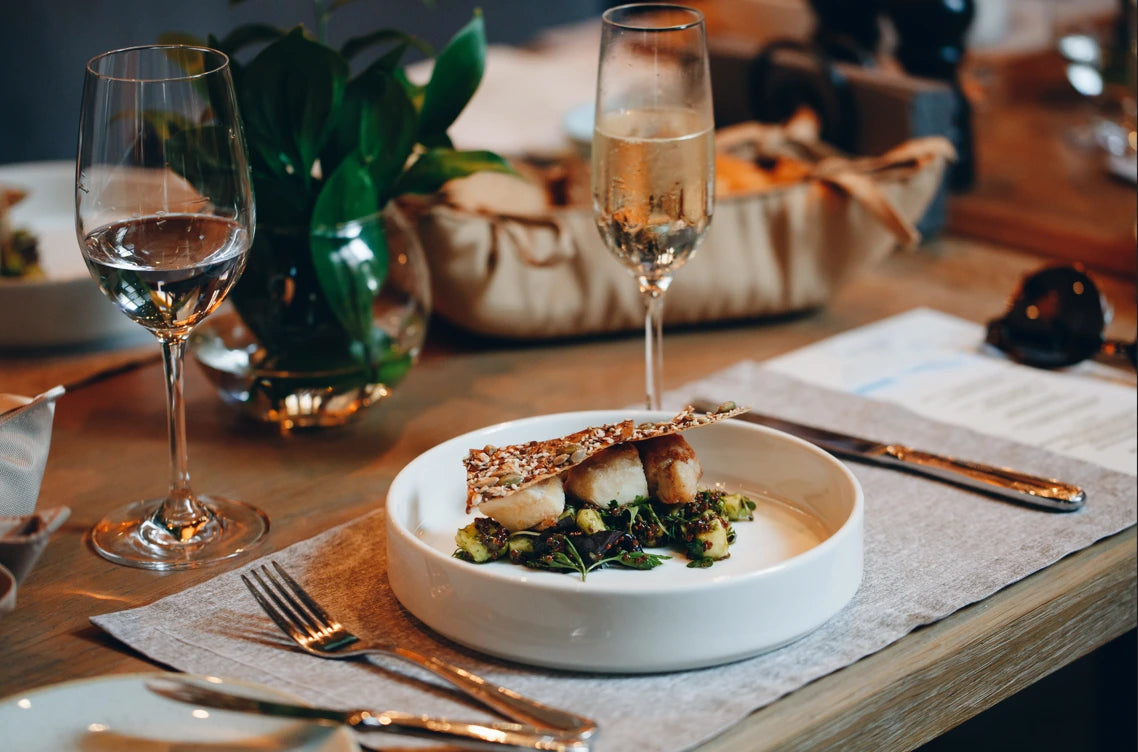
Glasses should be chosen according to the drinks served. A set comprising a water glass, a wine glass and a champagne glass is ideal for most occasions. Clear crystal is a classic choice for a
formal dinner, reflecting the light and adding a touch of elegance. For less formal occasions, glasses with touches of colour or contemporary designs can add a fun note.
The placement of the glasses is also crucial. They should be positioned at the top right of each place setting, in the order of use, from smallest to largest. This arrangement is not only practical, but also creates a pleasing visual symmetry.
In short, the choices of tablecloth, placemats, tableware, cutlery and glasses together form a harmonious whole that defines the atmosphere of your table. By taking each element into account, you create a dining experience that is both aesthetically pleasing and functional. Every detail, from the pattern of the tablecloth to the type of glass, plays a part in creating an elegant, welcoming setting for your guests.
With these elements in place, your table is not only a place to eat, but also a canvas for expressing your style and hospitality. Whether you are preparing a formal dinner or a relaxed meal, these tips will help you create a chic table that is inviting and will delight your guests and make your event unforgettable.
4. Table accessories: more than a practical matter
When it comes to setting a chic table, accessories play a crucial role. They are the finishing touch that can turn a pleasant table into a captivating work of art. Candle holders, vases, napkins and other embellishments are not just functional; they add character and depth to your arrangement.
Candle holders and lighting: a luminous ambience
Lighting is essential for creating ambience. Candle holders, whether tall and elegant or small and discreet, bring a soft, warm light. Choose candles in shades that complement your colour palette. For a modern touch, consider LED candles or string lights. The lighting should be enough to illuminate the table without being dazzling.
Vases and centrepieces: artistic focal points
The centrepiece is often the focal point of your arrangement. A vase of fresh flowers, an arrangement of branches, or even a composition of fruit can add a natural, lively touch. It is important that your centrepiece is not too tall, so that guests can talk easily. The look should harmonise with the overall theme of your table.
Napkins: elegance and function
Napkins, whether cloth or paper, are an opportunity for style. Choose napkins that complement your colour palette and think about creative folds. A well-folded napkin can be a decorative element in itself. You can also add napkin rings or small ornaments for an extra touch of elegance.
5. Etiquette and presentation: elegance in the details
Etiquette and presentation are the finishing touches that ensure your table is not only beautiful, but also functional and comfortable for your guests.

Layout and table etiquette
The arrangement of items on the table should follow certain rules of etiquette to ensure a comfortable, smooth meal. Plates should be centred in front of each chair, cutlery placed in the order of use and glasses positioned so they are easy to reach. The space between the cutlery and the plate should be balanced for a pleasing look.
Place cards and menus
Place cards are not only practical for directing guests to their seats; they can also be a decorative element. Use elegant cards that match the theme of your table. Likewise, printed menus can be a stylish addition, especially for special occasions. They give a preview of the meal and can be part of the decoration.
Napkin folding and other tricks
Napkin folding is an art form in its own right. Whether you opt for a simple, elegant fold or something more complex and creative, make sure it fits well with the rest of your table. Small touches, such as the choice of name holders or the way you arrange small accessories, can make a big difference to the overall experience.