The art of entertaining
Welcoming guests and sharing a meal is one of the oldest traditions in the world, an act that goes far beyond simply meeting a need for food. It is an art, an expression of hospitality and of the care we give to those we welcome into our space. A beautiful festive table is not only a matter of decoration; it is a canvas on which respect, love and attention to detail are painted. In our fast-paced culture, taking the time to set an elegant table is a gesture that speaks of intimacy and connection, a way of turning an ordinary meal into a memorable occasion.
Creating a festive table can be as rewarding as the celebration itself. It is a chance to unleash your creativity and play with colours, textures and shapes to compose a setting that reflects not only the occasion but also your personality. Whether you are preparing an intimate dinner or a large reception, the basic principles remain the same. It is about finding the perfect balance between function and aesthetics, between tradition and innovation.
This guide is your partner in this creative adventure. Together we will explore how to choose a theme, match colours, select tableware and polish every detail, so that your table is not only beautiful but also tells a story, that of your hospitality and your joy in sharing precious moments with your loved ones.
Choosing the theme and colour palette

Choosing a theme for your festive table
Choosing the theme is the first step towards creating a harmonious and attractive festive table. A well-chosen theme not only makes the decorating process easier but also gives your event a common thread. It can draw on many things: the season (a summer dinner outdoors, a cosy winter meal), a specific celebration (Christmas, Easter, a birthday) or a more abstract concept (rustic elegance, modern chic, a journey around the world).
When choosing a theme, think about the atmosphere you want to create. A nautical theme with shades of blue and marine decorative touches evokes a fresh, relaxing mood, ideal for a summer lunch. A "glamorous evening" theme with touches of gold and black can set an elegant and sophisticated atmosphere, perfect for a formal dinner.
Harmonising colours: creating a coherent palette
Once the theme is chosen, the colour palette is its visual translation. Colour can evoke emotions, create moods and visually link all the elements of your table. A harmonious colour palette will give your table a polished and thoughtful look.
Start by choosing one or two main colours that reflect your theme. Then add complementary or contrasting shades to create depth. For example, for an autumn-themed table, you could choose warm tones of orange, brown and red, completed by touches of olive green or gold for a subtle contrast.
Remember that colour is not limited to the tablecloth and napkins. It appears in the tableware, glasses, cutlery and even small details such as place cards or decorations. But be careful not to overdo it: a palette that is too busy can look chaotic. The aim is to reach a balance where each element complements the others, creating a visually pleasing and welcoming whole.
Practical tips for choosing and harmonising colours
Use fabric or paper swatches to test your colour palette before buying decorative items.
Think about the lighting in your space. Colours can vary considerably under different types of light.
Bring in natural elements to add texture and richness to your palette. For example, autumn leaves for an autumn-themed table, or shells for a nautical theme.
Do not be afraid to mix patterns, as long as they stay within your colour palette. A judicious mix of stripes, flowers and geometric patterns can add an interesting dimension to your table.
Tableware: selection and arrangement
Choosing tableware to suit the occasion

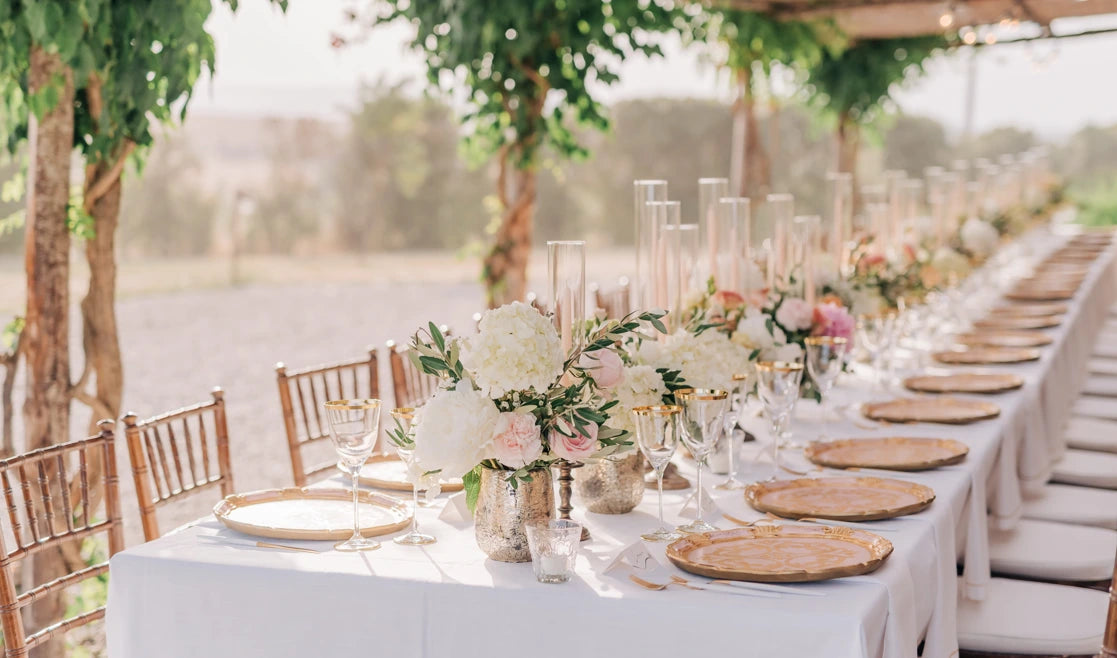
Tableware is the centrepiece of your festive table. It should be chosen not only according to your theme and colour palette but also to the type of event you are hosting. For a formal dinner, opt for refined porcelain or fine earthenware tableware with elegant details such as gilded rims or delicate patterns. For a more casual meal, stoneware or ceramic plates in bright colours or with fun patterns can add a touch of cheer.
The important thing is to find a balance between aesthetics and function. Make sure each guest has everything they need to enjoy the meal: a plate for each course, suitable cutlery and a glass for each type of drink served.
Guide to arranging plates, cutlery and glasses
Once the tableware is selected, its arrangement on the table becomes crucial. Start by placing a charger plate in the centre of each place setting. This plate stays in place until the main course is served. The cutlery is laid around the plate in the order of use, from the outside in. Forks on the left, knives and spoons on the right, with the knife blade facing the plate.
The glasses are placed at the top right of the main plate. If you are serving different types of drinks, such as water, red wine and white wine, arrange the glasses in the order of use, from smallest to largest. Remember to leave space between each item to avoid clutter and let your guests move easily.
Tip: to add a touch of sophistication, you can mix styles of tableware. For example, pair vintage plates with contemporary glasses. This approach gives your table a unique and personal look.
Table decorations and centrepieces
Choosing decorations

Decorations are essential to complement the theme of your table. They should be chosen carefully to complement the table rather than dominate it. Use elements such as candles for soft light, fresh flowers for a natural touch, or small decorative objects that match your theme. For example, for a winter festive table, consider using fir branches, pine cones and candles to create a warm atmosphere.
Creating a captivating centrepiece
The centrepiece is the focal point of your arrangement. It should be impressive enough to draw attention, but not so imposing that it gets in the way of conversation between guests. Height is a key factor: make sure your centrepiece does not block the view of guests seated opposite. You can opt for a low floral arrangement or a display of candles and natural elements.
Let your creativity run free here. A centrepiece can be as simple as a bouquet of seasonal flowers or as elaborate as a composition of several elements around a specific theme. For example, for a marine theme, you could create an arrangement of sand, shells and stone-like candles.
Creative ideas: DIY centrepieces
Use seasonal fruit such as lemons, oranges or pomegranates for a colourful and fragrant centrepiece.
For a personal touch, create small bouquets in individual vases for each guest.
Think of reusable elements such as lanterns or small potted plants that can serve as decoration long after the party.
Lighting and atmosphere
Lighting plays a crucial role in creating the perfect atmosphere for your festive table. It is not only about letting your guests see what they are eating, but also about creating a warm and welcoming ambience. Soft, subtle lighting can turn an ordinary room into a magical and inviting space.
For an indoor dinner, consider dimming the main lights and using secondary light sources, such as table lamps or candleholders. Candles are an excellent option for adding subdued light and a touch of romance. Scatter them across the table and around the room for a soft, enveloping mood. For outdoor events, string lights or lanterns can create a fairytale setting under the stars.
Besides lighting, the atmosphere of the table is also influenced by other sensory elements. Background music is an excellent way to relax your guests and set the tone for the evening. Choose a playlist that complements the theme of your party and the level of energy you want. Likewise, delicate ambient scents, such as those from scented candles or essential oil diffusers, can add an extra dimension to your guests' experience.
The finishing touches: personalisation and attention to detail
The final touch to your festive table lies in the personalised details that show your guests how much you care about their experience. Place cards, for example, are not only functional; they can also serve as decorative elements and keepsakes for your guests. Personalise them to suit the theme of the party or add a small handwritten note for a special touch.
The presentation of menus, if you use them, is another chance to shine. A well-designed, nicely presented menu can be a conversation point and a useful guide for your guests. For more informal parties, even a simple blackboard with the menu written in chalk can add an element of rustic charm.
Finally, think about your guests' needs and preferences. Have you planned options for those with dietary restrictions? Does the seating plan allow easy and pleasant conversation? These small considerations will not go unnoticed and will make every guest feel truly welcome and pampered.
In conclusion, setting a beautiful festive table is an art that combines aesthetics, function and attention to detail. Every choice, from the colour palette to the arrangement of the cutlery, helps create a memorable experience for your guests. Remember that the ultimate aim is to share an enjoyable moment and create precious memories with those you love.