
Welcome to the fascinating and creative world of Verano Design, where the magic of entertaining comes to life through the art of setting a table. You are about to embark on a captivating journey where every detail counts and the ordinary becomes extraordinary. Imagine a table that does not simply serve as a backdrop for your meal but becomes a work of art, an expression of your personality and your hospitality.
At Verano Design, we believe that setting a table is an act of love and creativity. Whether you are preparing dinner for two or a banquet for twenty, the way you arrange your table can completely transform the dining experience. First impressions count, and a well-laid table sets the tone for a successful evening. Today, we are going to show you how to create a simple but elegant dining table using items you probably already have at home. Our aim is simple: to help you create an atmosphere where your guests feel pampered and every meal becomes an unforgettable moment.
How to set a table with ease
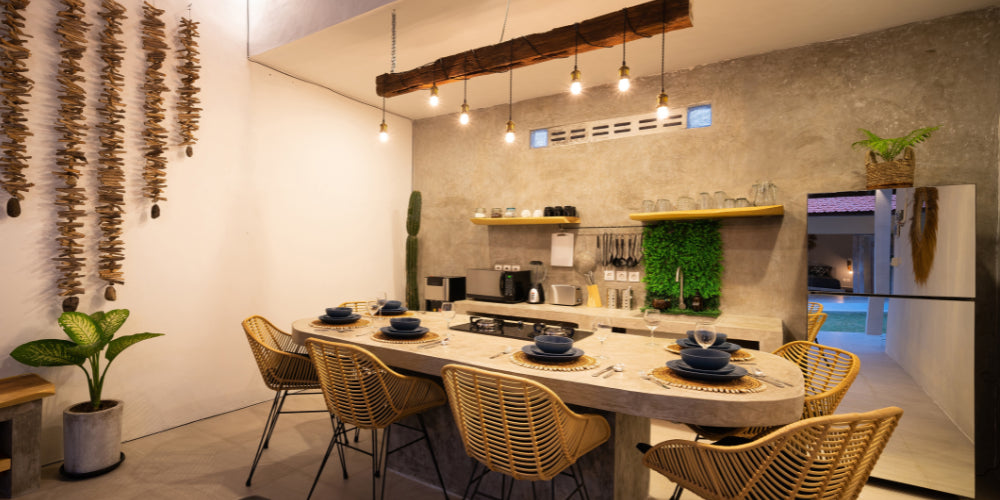
Setting a table can seem a complex and intimidating task. However, with a few tips and a little creativity, you can easily create a welcoming and elegant table. The trick is to start by defining a mood or theme. It can be inspired by the season, a special occasion or even your favourite dish. The theme you choose will guide your choice of colours, textures and accessories, and give your arrangement a harmonious common thread.
Choosing a theme or style
Choosing a theme is an excellent starting point. It can be as simple as picking a favourite colour or pattern, or as elaborate as recreating the atmosphere of a faraway destination. A marine theme with blue tones and shells, a rustic style with natural elements, or a glamorous setting with sequins and mirrors: the possibilities are endless.
Tip: If you cannot decide, opt for a white tablecloth. It offers a blank canvas that suits any kind of decor.
The foundation: tablecloth and plates
Your tablecloth is the foundation of your creation. It can be plain so as not to steal the show from your tableware, or patterned to add a touch of fantasy. Against this backdrop, place your plates. Start with a large charger plate, then add the soup plate or dessert plate depending on the menu.
Tip: Play with the textures and colours of your plates to add depth to your table.
Laying out the cutlery
Cutlery is laid out in the order of use, from the outside in. On the left, place the fork. On the right, the knife (blade facing the plate) and the spoon. The arrangement of the cutlery is not only a matter of etiquette; it also guides your guests through their dining experience by showing them the order of the courses.
Tip: Make sure the cutlery is neatly aligned and the same distance from the edge of the table for a harmonious presentation.
Choosing and placing glasses
Glasses add a touch of sophistication to your table. Place them at the top right of the plate, starting with the water glass, followed by the wine glasses if you are serving different wines. Their placement should be both practical for your guests and pleasing to the eye.
Tip: Use glasses of different shapes to create visual interest while respecting their function.
Table decoration: the centrepiece and accessories
The centrepiece is the focal point of your arrangement. Whether it is a bouquet of fresh flowers, an arrangement of candles or a composition of seasonal fruit, it should capture the spirit of your theme without blocking the view or the conversation between your guests. Accessories such as placemats, napkin rings and even a small gift for your guests can add a personal and thoughtful touch to your table.
Tip: Keep your centrepiece at a height that does not obstruct the view. If you opt for flowers, choose low arrangements.
The finishing touches
Details make all the difference. Think of small additions such as a handwritten menu card, a small posy next to each plate, or a slightly rumpled tablecloth for a more relaxed look. These elements help create a memorable experience for your guests.
Tip: Do not underestimate the power of details. Even the way you fold the napkins can add to the overall atmosphere.
How to place cutlery and glasses on a table
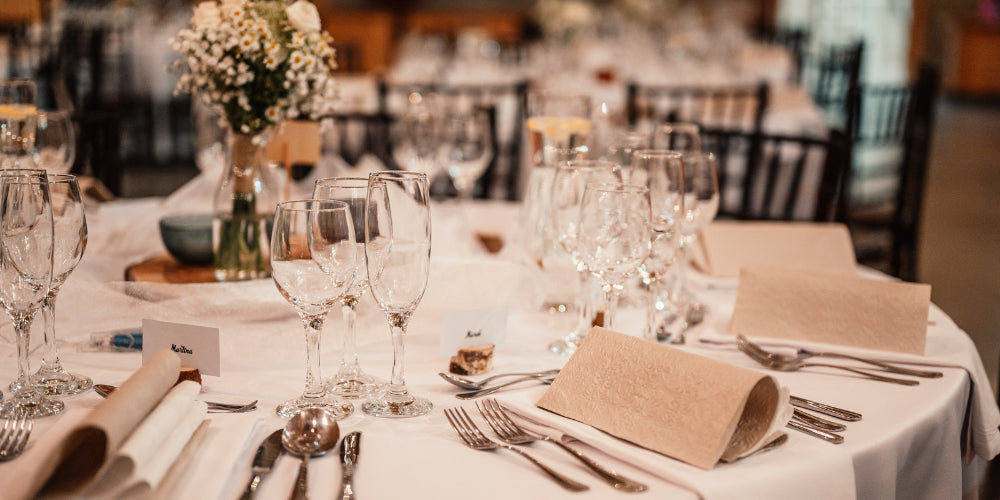
The arrangement of cutlery and glasses is essential in the art of setting a table. It is a subtle choreography that blends beauty and function, a silent invitation to your guests to enjoy every moment of the meal.
Cutlery:
The arrangement of cutlery is a ballet of precision and elegance. To the left of the plate, place the fork. Its position is no accident; it makes it easier to use for the majority of guests, who are right-handed. On the right, the knife, with the blade turned towards the plate, a symbol of respect and trust towards your guests. Next to the knife, place the spoon. This arrangement is not only practical, it also tells a story about the order in which the dishes will be enjoyed.
Tip: Align the handles of the cutlery with the bottom of the plate for an impeccable presentation.
Glasses:
At the top right of the plate, the glasses stand like guardians of refinement. The water glass, the largest of the glasses, takes its place first, followed by the wine glasses, if you are serving any. Arranging them in an arc creates visual harmony and makes them easy to reach during the meal.
Tip: Choose glasses that reflect the style of your evening: elegant and slender for a formal occasion, sturdier and more colourful for a relaxed atmosphere.
Why is the fork placed prongs down?
In this dance of cutlery, one question often arises: why is the fork placed prongs down? This tradition goes back to ancient times, when the fork, newly introduced, was considered a curiosity. Placing the prongs downwards was a sign of civility and sophistication, showing that the instrument was mastered and was not a weapon.
Tip: This tradition is mostly followed in formal settings and can be adapted to your style and comfort.
How to place glasses on the table
The placement of glasses on a table is a visual symphony, where each piece plays its part in creating a harmonious experience.
The arrangement begins with the water glass, the most used, placed just above the knife, followed by the wine glasses. The logic behind this arrangement is not only aesthetic but also practical. It allows guests to reach their glass easily without disrupting the flow of the meal.
Tip: When serving, fill wine glasses to about a third of their capacity to avoid spills and let the wine breathe properly.
Where to put the napkin on the table
The table napkin, far more than a simple utilitarian accessory, plays a central role in the elegance of your presentation. Its placement is not left to chance and actively contributes to the overall look of your table.
Traditionally, the napkin can be placed in two main ways. The first option is to lay it directly on the plate. This method, often used in high-end restaurants, gives a refined first impression and shows off a beautifully folded napkin or an elegant napkin ring. If you opt for this method, think of a presentation that adds a touch of elegance without being too cumbersome for your guests when they start to eat.
The other common method is to place the napkin to the left of the cutlery. This more traditional arrangement is practical and easy to reach. It also avoids crowding the plate, especially if you are serving several courses. Whichever method you choose, make sure the napkin is clean, neatly folded and in harmony with the rest of your decor.
Tip: For a personal touch, consider original folding techniques or the use of decorative napkin rings.
How to arrange paper napkins on the table
When you use paper napkins, creativity is the order of the day. Although less formal than cloth napkins, they offer an ideal backdrop for expressing your creativity and adding a playful touch to your table.
Paper napkins can be folded artistically and placed either on the plate or beside the cutlery. You can opt for simple folds such as a triangle or rectangle, or try more elaborate shapes
such as flowers or fans to add a touch of originality. If you are hosting a themed event, choose paper napkins that complement your theme, whether through colour, pattern or even texture.
Paper napkins can also be arranged in a decorative napkin holder placed in the centre of the table or beside each place setting. This not only keeps the napkins in place but also integrates them harmoniously into your table decoration.
Tip: If you opt for coloured or patterned paper napkins, make sure they do not clash with the rest of your decor. Subtle colour coordination can greatly enhance the overall look of the table.