
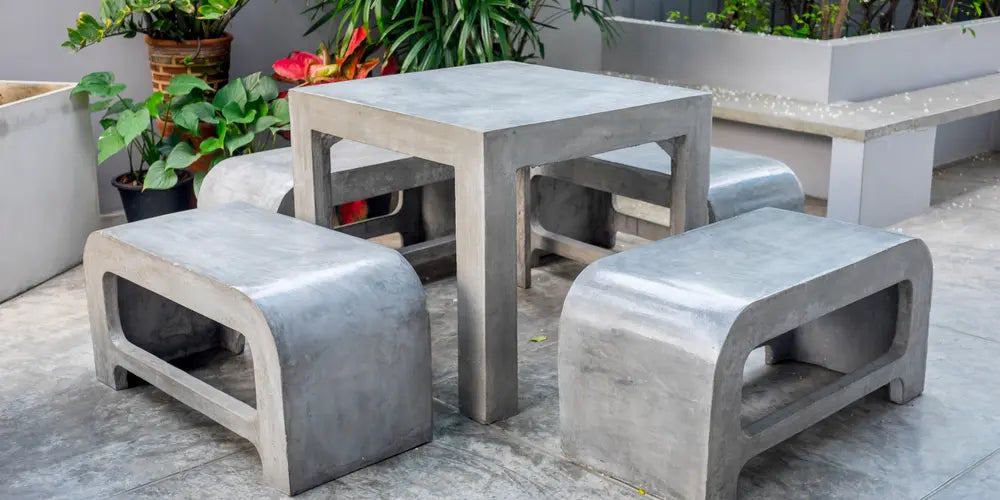
Our outdoor spaces have become a true extension of our interiors. A well-designed outdoor space can not only increase the value of your property but also offer a haven of peace in which to enjoy the sunny days. And at the heart of that space, whether it is a terrace, a patio or a garden, there is often a table: the central place for sharing meals with family or friends.
While there are many choices of materials and designs for your outdoor table, have you ever considered concrete? Durable and good-looking, a concrete garden table may well be the key piece missing from your outdoor space. This raw, sturdy material brings a contemporary, industrial look that will make your garden shine. And with a few DIY skills, you can even make this one-off piece yourself.
In this article, we will explore the reasons why you should choose concrete for your outdoor furniture and how to make your own concrete garden table. So get your tools ready and let your creativity run free!
1. Why choose a concrete garden table?

1.1 The benefits of concrete for outdoor furniture
The first advantage of concrete is undoubtedly its durability. Unlike wood, which can deteriorate over time, or metal, which can rust, concrete stands up to the weather and the passing of time. Its weight also gives it great stability, even in the strongest winds.
Concrete also offers great freedom in terms of design. Whether you prefer a raw, industrial style or a cleaner, more modern look, there are a multitude of possible finishes to personalise your concrete table.
1.2 Comparison with other materials
Compared with other materials commonly used for outdoor furniture, such as wood, metal or woven resin, concrete stands out for its strength and longevity. It is unaffected by UV rays, damp or changes in temperature. And unlike wood, which needs regular upkeep to stop it deteriorating, concrete is practically maintenance-free.
1.3 Styles and designs possible with concrete
One of the great strengths of concrete is its versatility of design. You can opt for a raw, natural look by leaving the concrete in its original state, or add pigments when mixing to obtain different shades. You can also play with textures by sanding or polishing the surface for a smoother, glossier look.
Beyond the simple rectangular table, concrete allows you to create unique, original shapes. So why not try a round table, an oval one or even one shaped like a leaf? The possibilities are endless!
Ready to start this exciting project? Stay with us to find out what you need to make your concrete garden table.
2. What you need to make it
Before diving into the making process, it is essential to have all the tools and materials you need to hand. This will make the process smoother and less stressful.
2.1 Detailed list of tools and materials needed
To build your concrete table, you will need:
- Ready-mixed concrete
- A large bucket for mixing the concrete
- A trowel or spatula
- A mould for the table (you can use plywood or buy a purpose-made mould)
- Sandpaper to smooth the surface once the concrete is dry
- Water-resistant tape to hold the mould together
- Varnish or sealant to protect the finished surface.
2.2 Where to get supplies
These materials are generally available in any DIY store. Make sure you buy concrete designed specifically for outdoor projects so that it can withstand the elements.
2.3 Precautions to take when buying materials
When buying your concrete, make sure it is well suited to your project. Some types of concrete are better suited to small structures, while others are designed for large-scale projects. If you are not sure, ask a professional in the shop for advice.
3. The making process step by step
Now that you have all your materials, it is time to start building your concrete garden table.

3.1 Preparing the mould
The first step is to prepare the mould. If you are using plywood, cut two pieces to the dimensions you want for the table and fix them together with water-resistant tape.
3.2 Mixing the concrete
Next, mix the concrete according to the instructions on the packaging. Make sure it is well mixed and that there are no lumps.
3.3 Pouring and drying
Pour the concrete into the mould and leave it to dry for at least 24 hours. Make sure the surface is as smooth as possible before leaving it to dry.
3.4 Finishing
Once the concrete is dry, carefully remove the mould and sand down any rough spots with sandpaper. Finally, apply a coat of varnish or sealant to protect the surface.
With these simple but detailed steps, you are well equipped to start making your own concrete garden table. So, are you ready to take up the challenge?
4. Tips for looking after your concrete garden table
4.1 How do you clean your concrete table?
Regular upkeep of a concrete garden table is essential to maintain its looks and durability. Simple cleaning with soapy water is generally enough, using a soft brush to avoid scratching the surface. Avoid harsh chemicals, which can damage the concrete.
4.2 How do you protect your table from the weather?
Concrete is a sturdy material, but extra protection can extend the life of your table. Use a sealant made specifically for concrete to protect it from damp and stains. A waterproof cover can also be useful during the winter months.
4.3 What should you do if your table develops cracks or chips?
Despite its strength, concrete is not immune to cracks or chips over time. Fortunately, these minor annoyances can often be repaired with filler or quick-setting cement made specifically for concrete.
Now that you know how to look after your concrete table, let us look at how you can bring this centrepiece into your outdoor layout.
5. How do you bring your new table into your outdoor layout?
5.1 Ideas for arranging the space around the table
A concrete table can be the focal point of your outdoor space. Think about surrounding it with lush plants to create a natural contrast, or place it under a parasol or pergola for a shaded dining corner.
5.2 What type of chairs should you choose to go with your table?
The raw look of concrete goes well with a wide range of materials. Metal chairs will bring an industrial touch, while wooden seats will soften the raw look of the concrete. For maximum comfort, consider adding weather-resistant cushions.
5.3 Decoration tips to make your concrete table shine
To enhance the look of your table, rely on elegant accessories: a colourful table runner, modern candle holders or refined tableware will all make your concrete table shine. Do not hesitate to play with textures and colours to create an atmosphere that suits you.
With these tips, you are now ready to make the most of your new outdoor centrepiece and to create a welcoming, stylish space around it.
In conclusion, the art of making a concrete garden table is not only a practical skill but also a creative expression that brings your outdoor space to life. Concrete offers a durability and a timeless look that few other materials can match, making your table a focal point around which you can arrange and decorate your outdoor space.
As we have seen in this article, the process of creating such a centrepiece can be a rewarding project. It certainly takes some investment of time and effort, but the results are satisfying and worth every moment spent. What is more, regular maintenance will ensure that your table stays beautiful and functional for years.
Now it is time for you to take action! Get started on this exciting DIY project and see how it transforms your garden. And remember, Verano Design is always here to help you complete your decor with our exclusive collection of high-end chairs, which will complement your new concrete table perfectly.
We cannot wait to see what you make! Do share your projects on our social networks with the hashtag. It could inspire other design enthusiasts like you to start their own project.
In future, we will continue to explore current and upcoming trends in designer furniture and decoration to bring you the most relevant and inspiring information. So stay tuned for more tips and ideas on how to turn your home and garden into a space that truly reflects your style and personality.
Finally, we invite you to continue the conversation by sharing your own experiences, ideas or questions about making concrete garden tables in the comments below. Your contribution enriches our community and helps everyone learn and grow. See you very soon at Verano Design!