
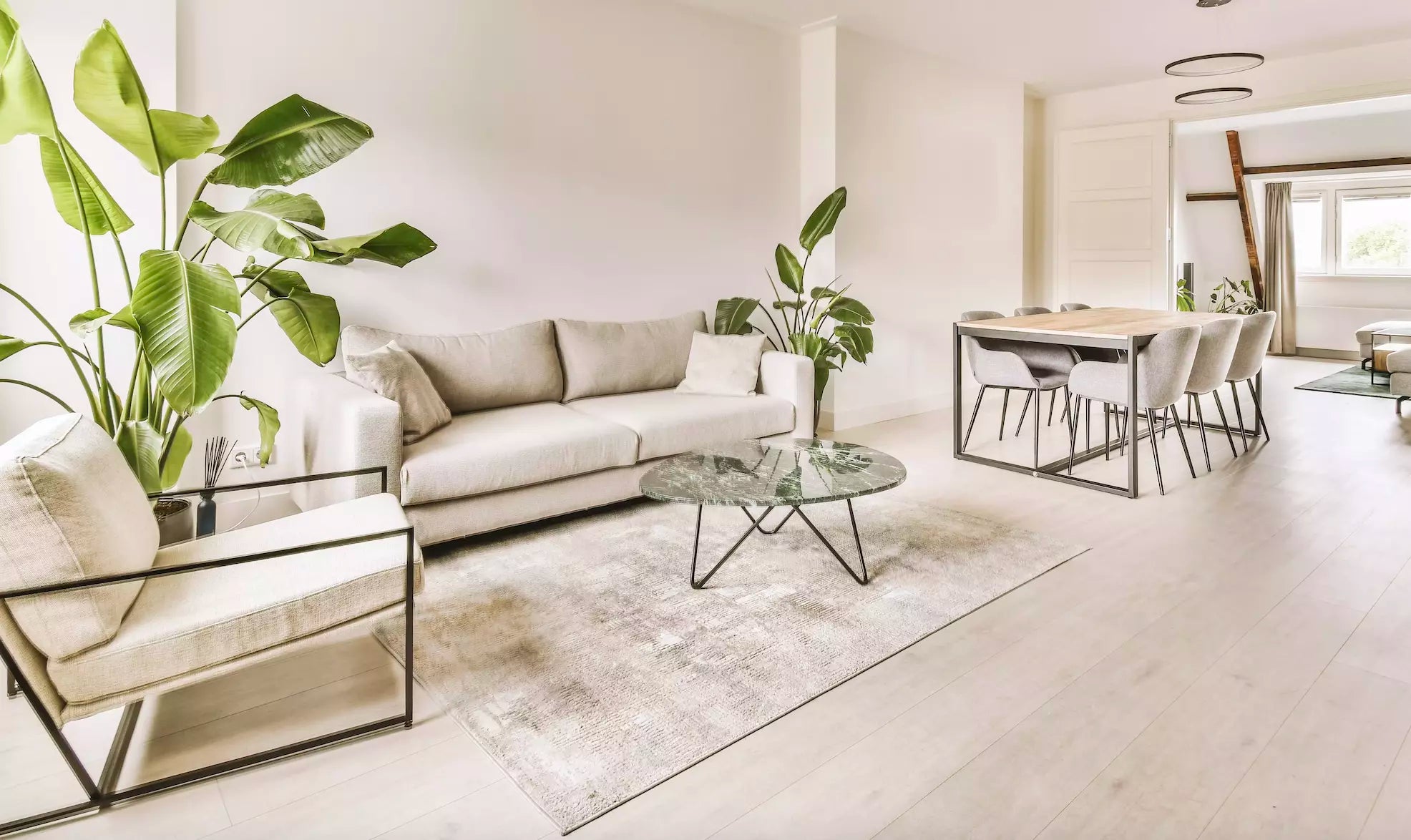
How to place a rug under a table?
The world of interior decoration is a field where every element counts in creating a unique, personal atmosphere. Among these elements, the rug has pride of place, able to transform the feel of a room completely. Today we are looking at one of the most delicate yet exciting aspects of interior decoration: placing a rug sensibly under a table. This simple addition can not only heighten the elegance of your living space but also improve its comfort and function. In this article, we guide you through the nuances and tips that will make your rug a real decorative asset beneath your tables, whether coffee tables or dining tables.
1. Which rug under a coffee table?
The coffee table is often the focal point of a living room, where eyes meet and conversations come to life. A well-chosen rug beneath this centrepiece can not only complete your decoration but also define and lift the surrounding space. Here are some tips for choosing the ideal rug for your coffee table.
The importance of size: The first step is to find a rug of the right size. A rug that is too small will make your furniture look as if it is floating in the space, while one that is too large can overwhelm the room. The general rule is that the rug should extend at least 20 cm beyond each side of the coffee table. This extra margin creates a harmonious frame, anchoring the table firmly in the space and giving comfort underfoot when you are sitting around it.
Choosing the right shape: The shape of your rug should generally follow that of your table. A rectangular rug works well with most coffee tables, but if you have a round table, consider a round rug for a consistent visual effect. This continuity of shapes creates harmony and flow in the room.

Style and texture: The choice of style and texture for your rug is crucial. You should aim to complement or contrast harmoniously with the style of your coffee table. For example, for a modern, clean-lined coffee table, a rug with geometric patterns can add a touch of elegance. For a rustic wooden table, a wool or jute rug can bring warmth and texture. Texture is also important for comfort underfoot and ease of cleaning, especially if you plan to spend a lot of time around the coffee table.
Colours and patterns: The rug is an excellent opportunity to bring colour and pattern into your living room. A brightly coloured or boldly patterned rug can become a focal point in an otherwise neutral space. Conversely, if your room is already rich in colour and texture, a rug in neutral or plain tones can bring a much-needed balance. Keep your room's existing colour palette in mind and aim to complement or pick up on those tones.
Practical considerations: Beyond looks, think about function. A rug under a coffee table will often be walked on, so it is important to choose a durable material that is easy to clean. Synthetic fibres, such as nylon or polypropylene, offer durability and easy care. If you prefer natural fibres, make sure the rug is treated to resist stains and wear.
Positioning and layout: Once you have chosen the perfect rug, its position is the key to creating the effect you want. Centre the rug under the coffee table, making sure the space around the table is evenly distributed. This creates a sense of order and balance in the room. If your living room is large, you can consider using the rug to mark out a specific area, such as a reading corner or a conversation area, adding to the function of the room.
By following these tips, you can turn an ordinary living room into an elegant and welcoming space, where every element, right down to the rug under the coffee table, plays its part in creating a harmonious and stylish environment.
2. Which rug under a dining table?
The dining room is a place for gathering, sharing and celebrating around your dining table. Choosing a rug under the dining table is crucial not only for looks but also for comfort and function. Here is how to select the ideal rug for this space.
Choosing the size: The size of the rug is paramount. It needs to be large enough for the chairs to stay on it even when they are pulled out to sit down or stand up. A general rule is to choose a rug that extends at least 60 cm beyond each side of the table, which allows chairs to move easily while keeping the look harmonious. This creates a defined zone for the dining area, especially in open-plan or multi-purpose spaces.

A practical material: As the dining room is a place for meals, choosing a material that is easy to clean is essential. Rugs in synthetic fibres such as polypropylene, or those treated to resist stains, are ideal. They are easy to clean after accidental spills and durable enough to withstand daily use.
Style and elegance: The style of the rug should complement the atmosphere of the dining room. For a traditional dining room, a rug with classic patterns or subtle shades can add a touch of elegance. For a more contemporary style, opt for bright colours or bold patterns. The rug can serve as the focal point of the room's decoration, guiding the choice of colours and styles for other elements such as tableware, curtains and artwork.
3. Harmony of colours and patterns
Visual harmony in a living space is essential for creating a pleasant and welcoming atmosphere. The choice of colours and patterns for your rug plays a crucial part in this harmony.
Colours: When choosing the colour of your rug, think about the overall effect you want to create. If your room already has a lot of colour, a rug in neutral tones or with a subtle pattern can balance the space without overloading it. If, on the other hand, your space is rather neutral, a colourful or patterned rug can add a touch of vitality and interest. Keep in mind the colours already in your room (walls, furniture, curtains) and choose a rug that complements or sets them off.
Patterns: Patterns on a rug can add depth and dimension to a room. However, it is important to avoid visual overload. If you already have patterns in your furniture or accessories, opt for a rug with a less dominant pattern or a simpler design. If your furniture and decor are rather understated, a patterned rug can be an excellent way of adding visual interest. Play with the scale of patterns to create balance: a large pattern on the rug can work well with smaller or more subtle patterns on cushions, curtains or artwork.
By combining these elements thoughtfully, you can create a space that is both elegant and comfortable, where rugs under tables become centrepieces that enhance your whole interior decoration.

4. The importance of placement
The placement of the rug in a room is an essential factor in maximising its aesthetic and functional impact. Here are a few things to consider for placing your rug ideally.
The centre of the room: A rug, especially under a table, should often act as the visual anchor of the space. In a living room, for example, placing the rug so that it sits in the centre creates symmetry and a natural focal point. In a dining room, the rug should be centred under the table to define the dining area as a distinct zone, particularly in open-plan layouts or large rooms.
Balance and symmetry: Make sure the rug is placed evenly under the table. A misaligned rug can make the whole room look untidy. Balance also matters for the proportion and distribution of furniture around the rug. A well-positioned rug creates visual harmony and balances the space between the furniture, the walls and the other elements of the room.
Considering the surrounding space: Take into account the space around the table and the rug. A rug should not obstruct movement in the room or interfere with doors or other furniture. It is essential to keep a clear, unobstructed passage around the central area to make movement easier and improve the function of the room.

5. Care tips and durability
A rug, especially under a table, is subject to daily wear. Here are a few tips for keeping it looking good and prolonging its life.
Regular care: Regular care is crucial to preserving the look of your rug. Vacuum it at least once a week to remove dust and debris. For long-pile rugs, use a vacuum cleaner without a rotating brush to avoid damaging the fibres.
Removing stains: Act quickly in the event of a spill or stain. Use a clean, damp cloth to blot the stain, avoiding rubbing, which can push the stain deeper into the fibres. Use cleaning products specific to the type of material your rug is made from.
Rotating the rug: To avoid uneven wear, especially in high-traffic areas, it is recommended to turn your rug through 180 degrees every six months. This ensures that all areas of the rug wear evenly over time.
Protection from the sun: If your rug is exposed to direct sunlight, it may fade over time. Use curtains or blinds to minimise sun exposure, especially during the hours when it is strongest.
Durability: When buying, choose a good-quality rug. A well-made rug in durable materials is an investment that can improve the look of your space and last many years. Look for rugs with good fibre density and a sturdy backing.
By following these tips on placement and care, your rug will not only beautify your space but also stand the test of time, remaining a key element of your interior decoration.
By following these tips, you will be able to choose and position a rug under your table in a way that enhances the look of your interior. A well-chosen, well-placed rug can turn an ordinary room into a welcoming and stylish space. Happy decorating!